
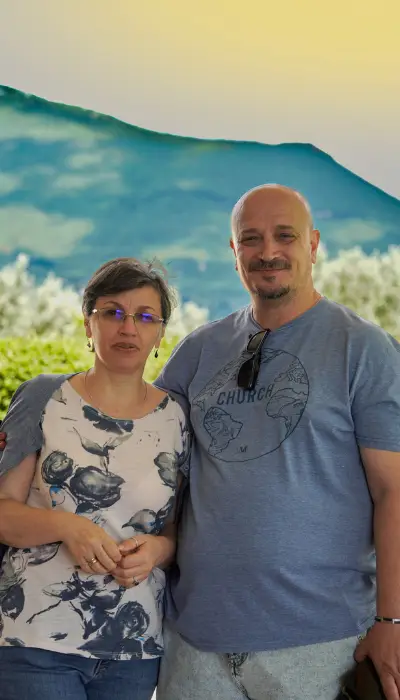
After nearly 5 and a half centuries under the Ottoman empire, 45 years of isolation 23 last of which a Constitution ban of any faith and religion practice, Albania opened up for the Gospel in 1991 when the Communist regime fell. We were both teenagers then, faithless, hopeless and wandering.
We became believers in the couple of years to come, respectively 1995, 1993 and were amongst the few first believers in our respective young churches.
Selah WAM a.k.a Qendra Selah was co-founded by Arben & Irma in January 2012 (officially as an NGO in 2017) as a call of God for the building up and the encouraging of the second generation of worshipers in Albania and the Balkans, to equip worshippers to become disciples of Jesus in Truth and Spirit.
our mission
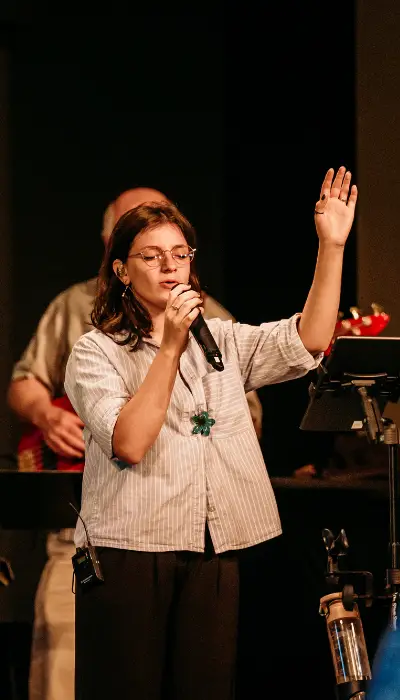
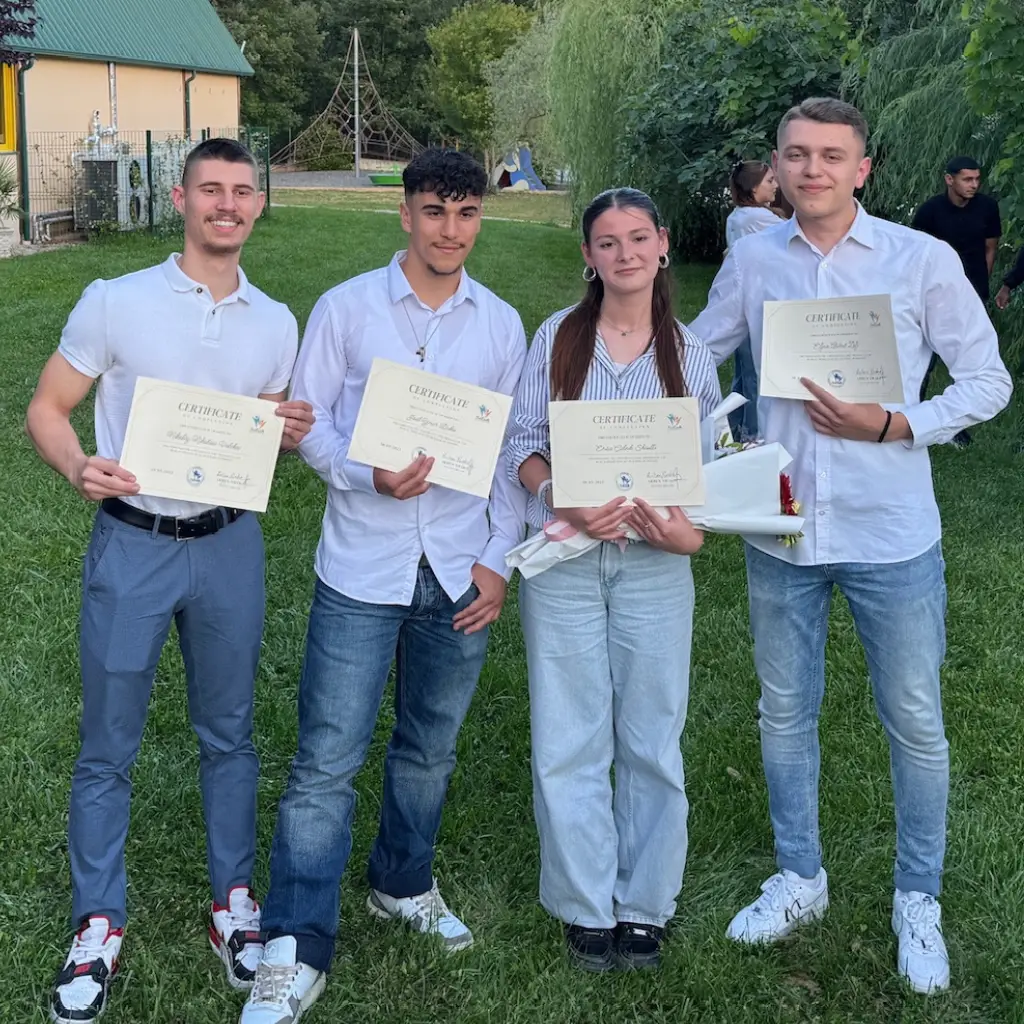
We exist to equip worshipers who know and love God to go and serve the Church in Albania and across the Balkans. Since 2009, what began with weekend seminars has grown into camps, a pilot school, and now a six-month residential program that shapes disciples first—then leaders, musicians, and technicians who return to strengthen their local churches.
Selah is helping the Church find its own voice—not only translating global songs but writing and releasing original worship in Albanian and neighboring languages. The work is spreading regionally (Greece, North Macedonia, Kosovo, Bulgaria, Bosnia, Romania) as graduates return to serve their local communities.
Formation before performance: Keep Jesus and the Scriptures at the center so Sunday sets flow from everyday discipleship.
Send & strengthen: Train residential students and local teams, then send them back to serve their home churches and mentor others.
Local songs for local churches: Build a recording pathway (studio, coaching, distribution) so Balkan worship rises from its own story and language.
A home for generations: Establish a permanent training center—a living landmark of prayer, formation, creativity, and community.
By faith, together: Expand staff and partnerships so more students can be trained without sacrificing depth of care.
Executive Director
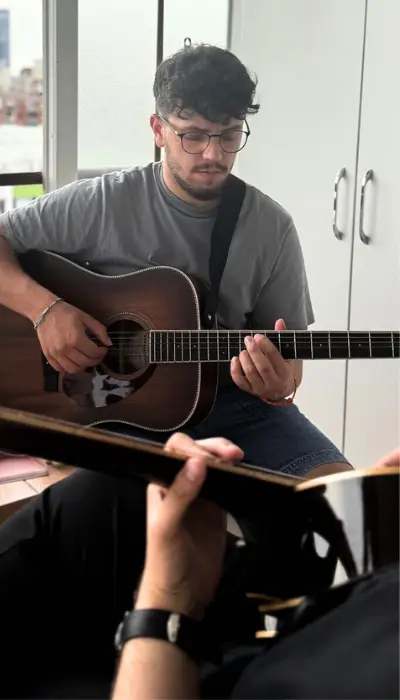
Theology and Piano Teacher

Co-founder
School Director

Theology and
Guitar Teacher

Percussion
Teacher
Yes. In the first century the Apostle Paul wrote:
“…from Jerusalem and all the way around to Illyricum I have fulfilled the ministry of the gospel of Christ.” — Romans 15:19
“Illyricum” included territory that is now modern Albania. Christianity likely reached this region very early, and ruins of ancient churches and mosaics show a first-millennium Christian presence.
After national hero Skanderbeg resisted but could not stop Ottoman expansion, Albania became part of the Ottoman Empire (late 1400s).
Heavy taxes and pressure led many to convert to Islam, but Catholic communities in the north and Orthodox in the south survived.
Faith endured quietly—similar to how God preserved a faithful remnant (see 1 Kings 19:18).
The National Awakening (Rilindja Kombëtare) revived Albanian language and culture.
Missionaries translated and printed Scripture in Albanian, helping literacy and faith renewal (see Isaiah 55:11).
In 1912, Albania declared independence, becoming a multi-faith nation.
The new state was unstable, endured foreign occupations in World War I, and became a monarchy under King Zog.
Italy invaded in 1939, followed by Nazi Germany.
Communist partisans eventually took power, fulfilling Psalm 2:1–4’s picture of nations raging yet under God’s sovereignty.
After World War II, Enver Hoxha imposed a Stalinist dictatorship.
In 1967, he banned all religion, closed or destroyed churches and mosques, and persecuted clergy.
Still, a quiet underground church survived (see Matthew 16:18 and 2 Corinthians 4:8–9).
The regime collapsed peacefully.
Religious freedom returned; missionaries re-entered, churches reopened, and many Albanians today are first-generation Christians.
Believers now dream of building a faith legacy that future generations can stand on.
In 1997, fraudulent “pyramid” investment schemes collapsed, wiping out savings and sparking nationwide unrest, looting, and violence.
The country descended into near-anarchy; over 2,000 people died in armed clashes.
Many missionaries fled for safety, and church work was disrupted. Yet local believers, though shaken, continued to gather and serve where possible.
For Christians, this echoes Hebrews 12:28–29 — when earthly systems collapse, God’s unshakable kingdom remains.